Showing posts with label Wendy Whelan. Show all posts

Sunday, March 1, 2015

Still More Ballet Quibbles and Bits . . .


Wendy Whelan's Conversation with Damian Woetzel

While searching the internet for some background information on Wendy Whelan, I found this wonderful clip recorded from a discussion between Wendy and Damian Woetzel that took place at 'Studio 5' at City Center on September 29, 2014 -- during the days leading up to Wendy's retirement from NYC Ballet.  
Wendy Whelan enjoying a laugh with Damian Woetzel at 'Studio 5' at City Center.
Photo by Christopher Duggan

It's nearly 57 minutes long and includes Wendy dancing an excerpt from 'Bitter Earth' with Tyler Angle and the 'After the Rain' pas de deux with Craig Hall -- both choreographed on Wendy by Christopher Wheeldon:

http://www.nycitycenter.org/Home/Blog/October-2014/Whelan-Talks-Robbins

It's delightful and worth the time -- you'll wish you'd been there that evening.

Lincoln Center's Segal Award Goes to 3 from SAB 

Claire Kretzschmar and Silas Farley (both members of the New York City Ballet corps de ballet and SAB alumni) and Alec Knight (an SAB advanced student) have been named 2015 recipients of Lincoln Center's Martin E. Segal Awards, which will be celebrated at a Lincoln Center gala at Alice Tully Hall on March 2nd hosted by Audra McDonald.  The awards are given each year to promising young artists nominated by Lincoln Center's constituent organizations -- Claire was nominated by NYC Ballet; Silas was nominated by the Lincoln Center Performing Arts Library; and Alec was nominated by SAB.  The late Mr. Segal was a former president of Lincoln Center who had a special interest in the careers of young performers.

Claire and Silas both received their early dance training in North Carolina before coming to the School of American Ballet and then going on to NYCB.  Alec came to SAB from Australia and was one of four students featured in the 2014 Teen Vogue 'Strictly Ballet' videos which I wrote about here:

https://www.blogger.com/blogger.g?blogID=7731047659115669466#editor/target=post;postID=632383314230361649;onPublishedMenu=allposts;onClosedMenu=allposts;postNum=2;src=postname

Here's a link to the SAB Facebook announcement about the Segal awards:

https://www.facebook.com/SABNYC/photos/a.399587493869.183424.36603863869/10152709748228870/?type=1&theater   

Congratulations to all of the honorees, but especially these three connected to SAB.

2/12/2015 Valentine's Day Open House at SAB

I attended the Valentine's Day Open House at the School of American Ballet.  Unfortunately, I arrived around noon, just as the advanced women were finishing classes with Kay Mazzo, Suki Schorer, and Susan Pilarre.
Suki Schorer (kneeling center) with the C-1 Class at SAB's Valentine's Day Open House.
Photo from the SAB Facebook page.
My first stop was for a brownie in the Student Lounge.  The bulletin board at the back of the Lounge was overflowing with posters and brochures for summer programs and professional auditions.  I counted over 20 schools and companies that will be holding auditions at the School between the middle of February and the middle of March.  As usual our students are in great demand.

Then I got a good seat in Studio 1 for the 12:30pm class.  I should have read the schedule more carefully, because watching Darci Kistler's class with the D ladies would have been much more interesting than Andrei Kramarevsky's class with the Advanced Men.  Mr. Kramarevsky is a beloved member of the faculty, but I always find his classes to be pretty chaotic and frustrating to watch.  

The students either don't understand his instructions or they ignore them.  For example, his sketchy instructions seem to suggest that the students should turn in one direction and then the other as part of a combination.  What happens is that the students turn in their preferred direction -- continuing to perfect their natural turning direction rather than striving to improve their turns in their weaker, less natural direction.

Twyla Tharp once said at a NYC Ballet seminar that Peter Boal was the only dancer she knew who could naturally turn equally well in both directions.  I'm sure that when Peter was a student at the School he practiced turning in both directions. 
Three students from the Advanced Men's class costumed for SAB's Valentine's Day Open House.
Photo from SAB Facebook page.
Following Mr. Kramarevsky's class I watched part of the Advanced Men's Variation class taught that day by Andrew Veyette -- a principal dancer with the Company.  He was teaching the opening phrases of the male variation from 'Swan Lake' (Balanchine's version I think) and his comments and corrections were illuminating for both the students and the observers.  Andrew seems to have a very good eye for spotting potential problems and then providing very positive feedback and understandable corrections to fix them.

More recently, I've watched as students in Andrew's Variation class perform the complete 'Swan Lake' variation.  It's amazing to see the progress that they've made working with Andrew in just two weeks.

A Chat with Resident Choreographer Justin Peck

On February 9th we attended NYC Ballet's seminar -- a conversation between Justin Peck, the Company's Resident Choreographer, and Ellen Bar, the Company's Director of Media Projects.  Of course, Justin has been the talk of the ballet world since the February 6th wide release of 'Ballet 422' -- the film about the creation of Justin's ballet, 'Paz de la Jolla' -- and the premiere on February 4th of 'Rodeo: Four Dance Episodes' -- his newest ballet for the Company.

My post about 'Ballet 422' and 'Rodeo: Four Dance Episodes' are here:

http://zylopho.blogspot.com/2015/02/comments-on-ballet-422.html

http://zylopho.blogspot.com/2015/02/nycb-2815-matinee-performance.html

About the making of 'Ballet 422', Justin said that the filming by Jody Lee Lipes (he's Ellen Bar's husband) was not intrusive during the creation of the ballet.  He said that Mr. Lipes, who was the film's cameraman as well as its director, was always around with his camera during the two months that the rehearsals went on and that no special lighting or sound equipment was needed, so Justin and the cast just got used to it.

About his new Aaron Copland ballet, Justin said that he discarded the original scenario from the Agnes DeMille ballet, 'Rodeo', but tried to maintain the atmosphere.  He was inspired by nature, specifically weather in creating the ballet.  
The five men who dance the second 'episode' of the ballet -- Daniel Applebaum, Craig Hall, Allen Peiffer, Andrew Scordato, and Taylor Stanley -- were on hand to dance that section.  Seeing it danced in practice clothes with piano accompaniment offers the opportunity to see the sheer brilliance of the choreography.  

Justin obviously cares deeply about these men with whom he has danced for his entire NYCB career and whose unique abilities he has captured in this section of the ballet.  Justin said that he used these five dancers to set other parts of the piece, because it's hard to get rehearsal time in the Company for 14 or 15 men all at one time.

Craig Hall joined the discussion following the 'Rodeo' excerpt and discussed his reactions to working on Justin's ballets, sharing a dressing room with Justin, and being part of the creative process for several different choreographers.

Despite all of his recent accomplishments, Justin comes across as a serious creator who is dedicated to the process of making ballets.  At the age of 27 he is very self-confident, but modest about his  enormous success over the last five years.

Sunday, November 16, 2014

Ballet Odds & Ends . . .

I just wanted to share a few bits about ballet that have recently come to my attention.

Wendy Whelan's farewell evening in her own words:

Here's a slide show of photos by Henry Leutwyler from Wendy Whelan's farewell evening on October 18th along with Wendy's comments on each:

http://www.vulture.com/2014/10/wendy-whelan-last-performance.html?mid=facebook_nymag#photo=1x00012

I was really impressed with the range and depth of her thoughts on her retirement from New York City Ballet.


Wendy Whelan's shoes for her final performance.  Photo by Henry Leutwyler

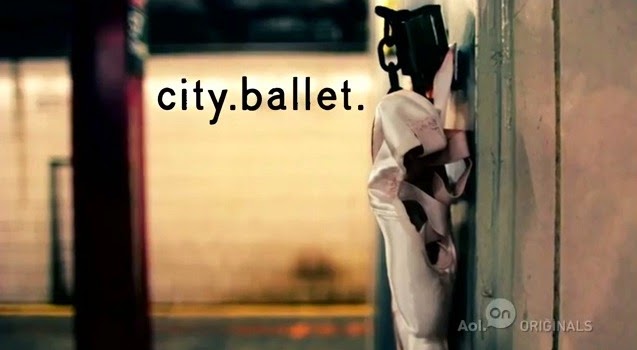
Second Season of city.ballet on AOL:

The second season of city.ballet is now up on AOL at:  

http://on.aol.com/show/517887470-city-ballet/518489161

There are 12 segments, each from 5 to 9 minutes long, covering various aspects of New York City Ballet.  The clips were taken during the company's preparation for the Fall Season that ended October 19th.  They feature several dancers and cover their lives both within the company and in the outside world.  Each segment is a small gem that can enhance viewer's understanding of what it's really like to be one of the exotic creatures that we see on stage a few times each year.  Gee, they're not so different from the rest of us!


city.ballet 'logo' from AOL

SAB Workshop on PBS 'Live from Lincoln Center:

PBS has announced that it will broadcast the School of American Ballet's June Workshop Performance on Friday, December 12th, at 9:00pm (hardly live, but certainly worth the wait).  The all-Balanchine program includes 'Serenade' (to Tschaikovsky's 'Serenade for Strings in C'); excerpts from Act II of 'Coppelia'; 'Swan Lake' (Balanchine's 1-act version); and the fourth movement of 'Western Symphony' (to Hershey Kay's music based on American folk themes).  You may recall my post about this program which you can read here:


http://zylopho.blogspot.com/2014_04_01_archive.html

There's a short PBS 'tease' clip of the students in 'Serenade' here:

http://video.pbs.org/video/2365363809/

You'll recall that I wrote about the workshop performances in my posting here:

http://zylopho.blogspot.com/2014/06/school-of-american-ballet-workshop.html 

By the way that's my most popular post so far -- thanks for your support.


Addie Tapp (now a Boston Ballet corps member) and Preston Chamblee (now an apprentice at NYC Ballet)
performing George Balanchine's 'Serenade' in the School of American Ballet Workshop last June.
Photo is a still from PBS Live from Lincoln Center broadcast to be aired on 12/12/14 at 9pm.

'Ballet 422' coming to movie theaters near you:

The documentary movie 'Ballet 422', which was well-received at film festivals this fall will be opening in movie theaters in February, 6, 2015.  It provides a behind-the-scenes look at the creation of New York City Ballet's 422nd original ballet -- Justin Peck's 'Paz de la Jolla'.  You can see the movie's trailer here:

https://www.facebook.com/video.php?v=1484789521803444&set=vb.1400931226855941&type=2&theater

Look for movie theaters near you displaying this poster.

Nutcracker couples rehearse:

Finally, around the Rose Building (where both the School of American Ballet and NYC Ballet have their studios) we're starting to see George Balanchine's 'The Nutcracker' taking shape for its annual season (this year from November 28th thru January 3rd).  Ballet master Albert Evans was rehearsing with Teresa Reichlen (Sugarplum) and Ask la Cour (Cavalier) on Tuesday afternoon.  On Thursday afternoon Ashley Bouder and Joaquin De Luz were rehearsing the grand pas de deux before a studio doorway packed with rapt students plus the School's Executive Director, Marjorie Van Dercook, and me.  And many of the younger students are busy rehearsing to be guests in the Party Scene, Mice, Angels, and Candy Canes.  And the older students are learning the Dewdrop and Sugarplum variations and the grand pas de deux from the wonderful faculty -- many of whom have danced those roles themselves.


Teresa Reichlen as the Dewdrop in George Balanchine's 'The Nutcracker'.  Photo by Andrea Mohin for NYTimes
  

Monday, October 27, 2014

New York City Ballet -- Tuesday, October 14, 2014

We attended the New York City Ballet performance on Tuesday evening, October 14th.  It was our first chance to see Justin Peck's 'Everywhere We Go' -- which was first seen during the Spring 2014 season.  The program also featured several debuts (*) in Balanchine's 'Chaconne' and Robbins' 'Interplay'.

TUESDAY EVENING, OCTOBER 14, 7:30 PM
[Conductor: Capps]
CHACONNE: Kowroski, T. Angle, *King, *Huxley, *Kikta, *Kretzschmar, *Sanz, *Woodward, *Hod, *Alberda, *Phelan, *Prottas
INTERPLAY: Pollack, *Wellington, *Mann, *Villwock, Walker, Alberda, Hoxha, *Coll (replaces Villarini-Velez)
[Solo Piano: Walters]
pause
AFTER THE RAIN PAS DE DEUX: Whelan, Hall [Solo Piano: Moverman, Solo Violin: Delmoni]
EVERYWHERE WE GO: Krohn, Isaacs, Hyltin, Reichlen, Danchig-Waring, Ramasar, Veyette

George Balanchine staged 'Chaconne' for Suzanne Farrell and Peter Martins in 1976.  
Peter Martins and Suzanne Farrell, the original cast in Balanchine's 'Chaconne'.
Photo by Max Waldman
The score is ballet music from Christoph Willibald von Gluck's opera 'Orphee et Euridice'.  Balanchine had worked with Gluck's score before.  First, in 1936 
he staged the opera for the Metropolitan Opera with decor by Pavel Tchelitchew.  The singers were in the pit with the orchestra and his American Ballet dancers were on stage   It lasted for two performances.  In 1963 he composed all of the dances for a production of the opera by the Hamburg State Ballet.  This production was mounted by the Paris Opera a decade later with some adjustments by Balanchine.  In 1975, a somewhat different version was performed by the Chicago Lyric Opera with dances by Balanchine.  'Chaconne' is based primarily on the ballets he created for the Hamburg State Opera version with adjustments, of course, for the special gifts of Farrell and Martins.

The ballet is divided into two distinct sections.  The first section (the Elysian Fields) begins with an ensemble of nine women with loose hair and long flowing beige costumes walking slowly about the stage in simple patterns.  As they exit the stage the principal couple (Maria Kowroski and Tyler Angle) in simple white costumes enter on a diagonal.  Their first moves are beautiful calm mirroring arabesques which they sustain joined only by one hand.  In recent seasons Maria and Tyler have formed a wonderful partnership which was fully displayed in this first pas de deux with its low, skimming lifts and off-kilter promenades to Gluck's 'Dance of the Blessed Spirits'.

As Tyler carried Maria off stage in a last series of low lifts, the stage brightens and the large cast entered for the divertissements and chaconne that end the opera -- a secondary couple (Lauren King and Anthony Huxley); a trio (Emily Kikta, Gretchen Smith and Aaron Sanz); five women (led by Indiana Woodward); two demi-soloist couples (Ashley Hod with Devin Alberda and Unity Phelan with David Prottas); and a corps of 15 (9 women and 6 men).  The Karinska costumes are white and pale blue; the background is a blue sky with wispy white clouds.  

Kikta, Smith and Sanz were making their debuts in the pas de trois.  The man is a troubadour plucking on an imaginary lute while his ladies strut in courtly fashion.  This new trio were astonishingly accomplished and conveyed the Baroque spirit of the piece.

The tricky pas de deux that follows was danced with sunny assurance by King and Huxley, also making their role debuts.  It is a tricky dance that relies on bent arms and legs as a recurring motif.  Anthony, sometimes an insecure partner, showed new confidence in the complex partnering with Lauren and between them there is a nice contrast of stage personalities -- Anthony dark and reserved, Lauren vivacious and fair.

The pas de cinq was lead by Indiana Woodward, another debutant, with twinkle.

Kowroski and Angle re-emerged in more formal white costumes to dance the final pas de deux.  The entrance is elegant, but with a cheeky swagger.  Balanchine brought out the high Baroque elegance in the music, which Farrell and Martins embellished with self-confident showmanship.  Maria Kowroski has always been a worthy heiress of the roles Balanchine created for Farrell, absorbing the style without all of the mannerisms.  Maria's long slender arms and legs and easy hyperextension were deployed here with grace and wit. 
Maria Kowroski in the second principal pas de deux from Balanchine's 'Chaconne'.
Photo by Paul Kolnik for NYC Ballet
Here Tyler proved himself an able interpreter of Martins' skillful, but not subservient, partnering.  Tyler shared the stage with natural nobility and elegantly understated style.


Following their pas de deux, there is a passage -- the actual chaconne -- for the 15 members of the corps with the two demi-soloist couples (Hod with Alberda and Phelan with Prottas, all in debuts).  They are then joined by the principal couple.  Balanchine loved the resolving the challenges posed by odd numbers of dancers on stage.  The patterns and combinations he devised for first 19 and then 21 dancers display his clever solutions.  Then, the entire ensemble gathers for the final courtly menage.
Maria Kowroski and Tyler Angle in the chaconne from Balanchine's 'Chaconne'.
Photo by Paul Kolnik for NYC Ballet

Jerome Robbins' 'Interplay' to the music of Morton Gould is the better of his 'kids just having fun' ballets.  It was first done in 1945 for Billy Rose's Concert Varieties and was staged for NYC Ballet in 1952.  Four of the eight dancers were making their debuts, but somehow I wasn't convinced that they were having all that much fun.  Their camaraderie seemed more calculated than spontaneous. 

The pas de deux from Christopher Wheeldon's 'After the Rain' followed.  It was on many programs over the last two weeks of the fall season -- as a vehicle for Wendy Whelan to bid farewell to her adoring audience.  I'll say it again -- Wendy Whelan is remarkable and nothing shows off her special magic better than Wheeldon's ethereal pas de deux of departure and impending loss.  For the past several years, Craig Hall, has been her sensitive, supportive partner.
Craig Hall and Wendy Whelan in the pas de deux from Wheeldon's 'After the Rain'.  Photo by Erin Baiano
The audience gave Wendy (and Craig) a standing ovation -- much deserved after her indelible 30-year career with the company.


The final work of the evening was Justin Peck's 'Everywhere We Go' which premiered during the Spring 2014 season.  Choreographed to nine 'musical movements' commissioned from Sufjan Stevens by NYC Ballet with a cast of 25 -- a mixture of principals, soloists and corps dancers.  The 13 women all wear leotards with black and white striped tops and white bottoms separated by a single red band above the waist; the 12 men all wear leotards with grey tops and black bottoms separated by a single red band.  The costumes are by  Janie Taylor, the former NYCB principal dancer.
Andrew Veyette and Sterling Hyltin with cast in Justin Peck's 'Everywhere We Go'.
Photo by Paul Kolnik for NYC Ballet
The backdrop by Karl Jensen is a backlit honeycomb of overlapping hexagons that changes shapes between each of the nine sections.    

There are two prominent motifs that occur throughout the piece.  One is a large group of dancers lying on their backs with one leg pointed straight into the air.  Often this is accompanied by other dancers touching the raised feet as they circle the prone dancers.  The second is some dancers going limp and being caught by other dancers and gently laid on the floor.

As usual with Peck's choreography, there is no specific hierarchy to the piece with individuals emerging from the group for solos and duets and then merging back in.  Teresa Reichlen has dazzling solo passages and Ashley Isaacs paired with Amar Ramasar particularly catches the eye.
Teresa Reichlen jetes past three men from the cast (Taylor Stanley, Daniel Applebaum and Andrew Scordato).
Photo by Andrea Mohin for the NY Times
Peck needs to learn to edit his work, so that he doesn't fall into the Jerome Robbins trap of leaving the audience begging for less.  Six or seven 'musical moments' would probably have been better than nine and might have resulted in less repetition.  The whole cast succumbing to the plague once is interesting -- twice it's redundant and frankly rather tiresome at the end of a long evening.

Could Peck's ballet be about honeybees (the backdrop) and the unexplained collapses of bee colonies?  Is Reichlen the queen bee?


Monday, October 13, 2014

New York City Ballet -- Sunday, October 5, 2014

On Sunday afternoon, October 5th, we saw New York City Ballet in an all Balanchine program.  It was anything but austere neo-classical Balanchine though.

SUNDAY MATINEE, OCTOBER 5, 3:00 PM
[Conductor: Capps]
DONIZETTI VARIATIONS: T. Peck, De Luz
LA SONNAMBULA: Whelan, R. Fairchild, Arthurs, Sanz, Adams, Villwock, Laurent, Ippolito, King, Carmena, Schumacher
FIREBIRD: Bouder, J. Peck, Muller. Catazaro

Tiler Peck airborne in Balanchine's  'Donizetti Variations'.  Photo by Andrea Mohin for NY Times
The opening work was 'Donizetti Variations' from 1960, set to the effervescent ballet music from Gaetano Donizetti's 'Don Sebastian'.  Unfortunately the dancing didn't consistently project the buoyancy of Mr. B's choreography.  Tiler Peck and Joaquin De Luz are not ideally paired as the principal couple -- Joaquin is too short and too forceful, while Tiler is a bit too reticent and refined, neither projecting quite enough of the work's bubbly exuberance.  The corps dancing lacked the crispness that makes their sections so witty when they are danced with confidence and brio.

'La Sonnambula' (called 'Night Shadow' when it was first seen in 1946 at the Ballet Russe de Monte Carlo) uses music of Vittorio Rieti based on themes from the operas of Vincenzo Bellini.  It is set at a masked ball given by the Baron in the courtyard of his castle.  An arch at the back of the stage is bridged by a second floor gallery leading to a circular tower stage left with a starry sky beyond.

After an initial dance lead by the Baron (Aaron Sanz, who made his debut in the role the prior day) and the Coquette (Faye Arthurs), the Poet (Robert Fairchild) appears. The Poet and the Coquette seem to know each other, but the Baron stiffly introduces them anyway and then stalks off.  There are divertissements for the guests:  a Pastorale for two couples (Sara Adams, Sarah Villwock, Ralph Ippolito and Austin Laurent); a pas de deux for an Oriental couple (Lauren King and Antonio Carmena, both in splendid form); and a Harlequin (Troy Schumacher).  During the divertissements, the Coquette and the Poet sit on a bench under the arch where they flirt, while the guests gossip about them.

After the entertainment, the Coquette and the Poet lead the guests in a dance which involves a great 'ice capades' circle and some intertwining chains.  As the guests promenade off stage, the Baron suddenly appears and grabs the Coquette away, leaving the Poet alone on stage.

A light appears in the gallery window stage right and slowly crosses the gallery and descends the tower stairs.  The Sleepwalker (Wendy Whelan) enters from the tower door carrying a candle while wafting about the stage in ethereal bourrees.  
Wendy Whelan as the Sleepwalker in Balanchine's 'La Sonnambula'.  Photo by Paul Kolnik for NYC Ballet
The Poet is enchanted but the Sleepwalker continues on in her trance, eluding him and his efforts to distract and awaken her.  They engage in a 'pas de deux' -- the Poet only touches the candle, but never the Sleepwalker.  The Coquette emerges and observes the Poet following the Sleepwalker into the tower.  Enraged, she rushes off to tell the Baron.  


The guests reappear for another dance lead by the Baron and the Coquette. During the dance she tells the Baron that the Poet has followed the Sleepwalker into the tower.  The Baron draws a dagger and rushes into the tower.  The Poet staggers out clutching his chest and collapses center stage.  The Sleepwalker reappears, still in a trance but somehow aware that the Poet lies dead at her feet.  The four divertissement men lift his lifeless body and place it in the Sleepwalker's arms.  She exits into the tower carrying the dead Poet.

Rob is the lucky Poet torn between Faye's gorgeous, worldly Coquette and Wendy's ethereal, other-worldly Sleepwalker.  As an artist, of course he chooses the elusive muse over the glamorous but shallow courtesan.  This role is one of Wendy's late-career triumphs and in Rob Fairchild she has found yet another ardent partner.
Wendy Whelan and Rob Fairchild during curtain calls for 'La Sonnambula'.
Photo by Edward G. Becker for Ballet Focus
The final ballet of the afternoon was 'Firebird' to the familiar Stravinsky orchestral suite with costumes and scenery based on the work of Marc Chagall.  Balanchine created the ballet in 1949 for Maria Tallchief, his wife and muse at the time.  It created a sensation and catapulted Tallchief into the role of prima ballerina of the year-old New York City Ballet.

Ashley Bounder in the title role of George Balanchine's 'Firebird'.  Photo by Paul Kolnik for NYC Ballet
    
Ashley Bouder's interpretation of the Firebird is justly renowned.  Legend has it that she learned the role from Sean Lavery in something like 20 minutes in 2000, when she was called upon as a last minute replacement.  Ashley has since polished it to a breath-taking gleam.  Her glamorous entrance, her avian pas de deux with Justin Peck (as the oafish Prince Ivan), her calmly skimming berceuse all use Ashley's technical arsenal to magical effect.  The surrounding ballet goes on too long and relies on Stravinsky's music and Chagall's decor to carry the tale and provide both platform and frame for Ashley's superb dancing in the title role.

Saturday, October 11, 2014

New York City Ballet -- October 6, 2014 -- Wendy Whelan Farewell

On Monday, October 6th, we went to New York State Theater for a NYCB Association seminar devoted to Wendy Whelan's 30-year career with the Company.  It was really a chat between Wendy and Tyler Angle -- one of her regular partners over the last few years.
Wendy Whelan & Tyler Angle in Christopher Wheeldon's 'Polyphonia'.  Photo by Paul Kolnik for NYC Ballet
Wendy was part of the first generation of dancers to join the Company following Balanchine's death in April of 1983 -- Wendy became an apprentice in 1984 and joined the Company in 1986.  In discussing her earliest days with the Company, she noted that she didn't miss Balanchine's presence, because he had never been around when she joined the Company, but that she missed his approval of how she danced the roles he had created for others.
Wendy Whelan in the studio with the choreographer Christopher Wheeldon
She only realized how much this could mean when she started working with living choreographers on new works.  She was particularly inspired by working with Christopher Wheeldon (first on 'Polyphonia' which premiered in early 2001) and Alexei Ratmansky (first on 'Russian Seasons' which premiered in mid-2006).  Wheeldon created roles in seven more ballets for Wendy; Ratmansky created roles in three more.  The two choreographers are working on a piece d'occasion for Wendy's farewell performance on October 18th which she will dance with Tyler Angle and Craig Hall.


Wendy Whelan and Craig Hall in 'After the Rain' by Christopher Wheeldon, photo by Paul Kolnik for NYC Ballet
When the subject of mentoring was raised, Wendy laid out the lineage of her special relationships with her fellow dancers:  Heather Watts who danced under Balanchine had mentored the young Jock Soto; Jock in turn mentored Wendy; and Wendy has mentored both Craig Hall and Tyler Angle who have been her primary partners following Jock's retirement.  Wendy says that she's always open to other colleagues asking for advice and assistance, but 'they have to ask'.    

Recently, she has been teaching advanced girls at Ballet Academy East and looks forward to continuing that mentorship role as time permits.  An audience member asked why she was teaching at Ballet Academy East rather than at the Company's official school, The School of American Ballet.  She answered, 'that's not up to me'.  I would only add, that's SAB's loss.

Among her favorite roles: the final waltz in Balanchine's 'Liebeslieder Waltzer' and the last movement of Balanchine's 'Brahms-Schoenberg Quartet'; Robbins' 'The Cage', 'Dances at a Gathering' (especially the Grand Waltz), and 'In Memory Of . . .'; plus all of the works created for her by Wheeldon and Ratmansky.

Roles she would have liked to dance (it seems she's danced every role in the Company's repertoire):  Balanchine's 'La Valse' and Robbins' 'Afternoon of a Faun'.

Next steps in her career: Wendy takes her show 'Restless Creature' on the road for six months starting in January.  It features four works by four young, male choreographers who are also her partners in their works.
Wendy Whelan and Joshua Beamish in his piece from 'Restless Creature' .  Photo by Christopher Duggan.
Next summer an evening of new works created for Wendy and Edward Watson of the Royal Ballet at Covent Garden which will transfer to City Center in New York in 2016.  Wendy has been named Artistic Associate at City Center for two years beginning next month.  In other words, when she leaves City Ballet on October 18th, Wendy will not be resting on her considerable laurels.  
Wendy Whelan preparing toe shoes in her dressing room at Lincoln Center.
Photo by Beatrice de Cea for the New York Times 
You can go to Wendy's web page (www.wendywhelan.org) to keep up with her.  It includes a schedule of 'Restless Creature' dates and a wonderful 11 minute video about her life to date. 


Friday, March 28, 2014

Class Visit at SAB

A good friend, Jean McC, was visiting from Wisconsin last week.  She and her good friend and former NYC neighbor, Anne McC, are Jock Soto groupies.  So the three McC's took in one of Jock's classes at SAB last Wednesday.  It was a two-hour Adagio (partnering) Class for the Intermediate Men and C1 Girls.


School of American Ballet, Adagio Class with C1 Girls and Intermediate Men,
photo by Rosalie O'Connor for School of American Ballet

Many of the C1 Girls have already gone through a growth spurt and emerged as tall (especially en pointe), lithe young women, usually between 13 and 16 years old.  Some of the Intermediate Men, sometimes as young as 12, are already quite tall and strong, but many are still growing and gaining strength.  In general, these girls are taller than these boys. 

In previous weeks, Jock had apparently taught this class the full wedding pas de deux from the final act of 'Sleeping Beauty'.  Needless to say, this is a very difficult piece of choreography and a challenge for the most accomplished professional dancers in the world.  Jock had modified the choreography only slightly to account for the technical level of these students -- a slight modification of the fish dives being the most obvious change.


Tyler Angle and Katherine Morgan in the Wedding Pas de Deux  from the final Act of 'The Sleeping Beauty',
as staged by Peter Martins (after Petipa), photo by Paul Kolnik for NYC Ballet
(in August, 2012, Katherine took a leave from NYC Ballet to deal with serious health issues)
There were more than twice as many healthy C1 girls as healthy Intermediate Men.  (There were several boys and one girl on the sidelines with injuries or illness -- students are required to attend classes unless they are bed-ridden or have something contagious).  So all of the men danced the pdd at least twice during the class while each girl danced just once.

Two couples danced at a time, except for the final run through when there were three couples remaining.  As with other Adagio classes I have watched, the first couples to dance receive more of Jock's attention than those who dance later.  In essence, though, all of the students waiting to dance are observing and learning from all of Jock's corrections and suggestions.  They are often practicing the corrections at the back of the studio as they await their turn to dance.  Jock delivers his suggestions and corrections with a light, often funny touch.  He has no problem assuming either the male or female role in order to demonstrate the point he is making. (Yvonne Borree is scheduled to join Jock for this class, but was unavailable on the day of the visit.)

In the early rounds, it is obvious that the couples have sought each other out and are comfortable dancing together -- a kind of balletic version of Darwin's theory of natural selection. Sometimes that's because they are a couple, or at least good friends, outside of the studio.  Hopefully, it's also because they complement each other dancing together.  In latter rounds, Jock intervenes a bit to make the best pairings among the remaining students.

Dancing the complete pdd, including the male and female variations and the coda, is a real effort for these still-growing young students.  Centers of gravity change from one partner to another and the young men struggle to adapt to different height and centering.  Some of the girls are less willing to trust their partners which can look more like wrestling than ballet at some points.  But at the end of each run-through these students are glowing with satisfaction and basking in Jock's praise.

Jock Soto is an extraordinary teacher.  He had a long and illustrious performing career, forming notable partnerships with several ballerinas including Heather Watts and Wendy Whelan, and becoming a muse for numerous choreographers including Christopher Wheeldon. 

Jock Soto & Wendy Whelan in Balanchine's 'Symphony in Three Movements',
photo by Paul Kolnik for NYC Ballet

Long before he retired from the stage in 2005, Jock began teaching at SAB.  When Stanley Williams (the revered SAB teacher who was recruited by Balanchine from the Royal Danish Ballet in 1964) became sick in the mid-90's and then died in 1997, several principals from New York City Ballet (including Soto, Peter Boal and Nikolai Hubbe) who had studied with Stanley agreed to teach Stanley's classes at SAB to fill the enormous gaps in the schedule.


Not only was Jock an outstanding partner during his performing career, but he knows how to convey the concepts of partnering to his SAB students, both male and female. Under his guidance a whole roster of exemplary male partners have emerged from the School into New York City Ballet and many other companies. The Angle brothers, Robert Fairchild, Adrian Danchig-Waring, Chase Finlay, Amar Ramasar, Craig Hall and Zachary Catazaro are among the exemplary partners at City Ballet who have emerged under Jock's tutelage. Seth Orza, a principal at Pacific Northwest Ballet, also comes readily to mind.  I hesitate to guess how many of today's ballerinas have learned to be partnered in Jock's adagio classes.